Why Getting Closer Doesn’t Feel Like Winning

Can you relate to this scenario?
You make progress. Real progress. You hit a milestone that six months ago felt intimidating. You launch the thing. You land the client. You publish consistently. You reach a number that once lived only in your imagination.
And instead of feeling transformed, you feel… normal.
Not disappointed. Not empty. Just normal.
That’s the moment most people misinterpret.
We tend to believe that growth will feel dramatic. That crossing a threshold will create a visible internal shift. That we’ll wake up the day after a milestone feeling more legitimate, more confident, more secure.
But progress rarely announces itself like that.
In a previous piece, I wrote about what happens when results arrive before identity catches up. That’s the dynamic people often label imposter syndrome. Externally, you’ve advanced. Internally, you still feel behind.
What’s less discussed is the opposite pattern.
Sometimes your identity evolves quietly along with your results. You stretch. You practice. You tolerate discomfort. You build skill. And by the time you reach the milestone, the version of you who once found it intimidating has already changed.
The growth didn’t wait at the summit. It happened on the way up.
So when you arrive, it feels ordinary.
And if you’re not careful, you’ll mistake that ordinariness for insignificance.
There’s research that helps explain why this happens. Dopamine, the neurotransmitter associated with motivation and reward, is more strongly tied to anticipation than to the reward itself. Studies by neuroscientist Wolfram Schultz and others have shown that the brain lights up more in pursuit than in possession. The chase carries energy. The arrival is often shorter and quieter than expected.
On top of that, psychologists have long documented hedonic adaptation, the tendency for humans to normalize new circumstances rapidly. What once felt extraordinary becomes baseline faster than we think. That raise, that launch, that client, that level of consistency—it settles into “normal” with surprising speed.
From the outside, that can look like dissatisfaction.
But from the inside, something else is happening.
Your subconscious updates through repetition. Identity shifts gradually. Tolerance expands in increments. By the time you’re “closer,” the stretch that once felt daunting has already been integrated into who you are.
You don’t feel explosive because you’ve embodied it.
Here’s where the problem begins.
If you only allow yourself to feel successful when growth feels dramatic, you will consistently underestimate yourself. You’ll downplay your progress. You’ll brush past milestones. You’ll move the goalpost without consolidating the level you’ve just stepped into.
And that has consequences.
When you minimize your growth, you flatten your emotional state. You stay neutral. Or mildly dissatisfied. Or perpetually “almost there.” A flat internal state does not fuel bold action. It does not increase creative risk. It does not build durable confidence.
You end up chasing intensity instead of building stability.
This is not an argument for complacency. It’s not a call to slow down your ambition. It’s a call to integrate it properly.
You can charge toward the summit and still enjoy the climb. In fact, if you don’t learn how to experience progress as it happens, you’ll keep deferring positive emotion until some future milestone that will also feel… normal.
That’s not a goal problem. It’s a calibration problem.
After your next milestone, pause. Not to celebrate endlessly, but to stabilize.
Ask yourself:
What used to intimidate me that now feels routine?
What discomfort have I outgrown?
What skill have I embodied that I once had to force?
Who have I become in the process of getting here?
If you can’t answer those questions, you’re moving too quickly to consolidate your level.
And if you constantly feel like you’re “not there yet,” even as you expand, it may not be a motivation issue at all. It may be that you’ve trained yourself to measure progress externally rather than integrating it internally.
That pattern doesn’t correct itself with bigger goals.
It requires conscious recalibration.
If this resonates, watch the full video below or on YouTube, where I unpack this dynamic in more depth.
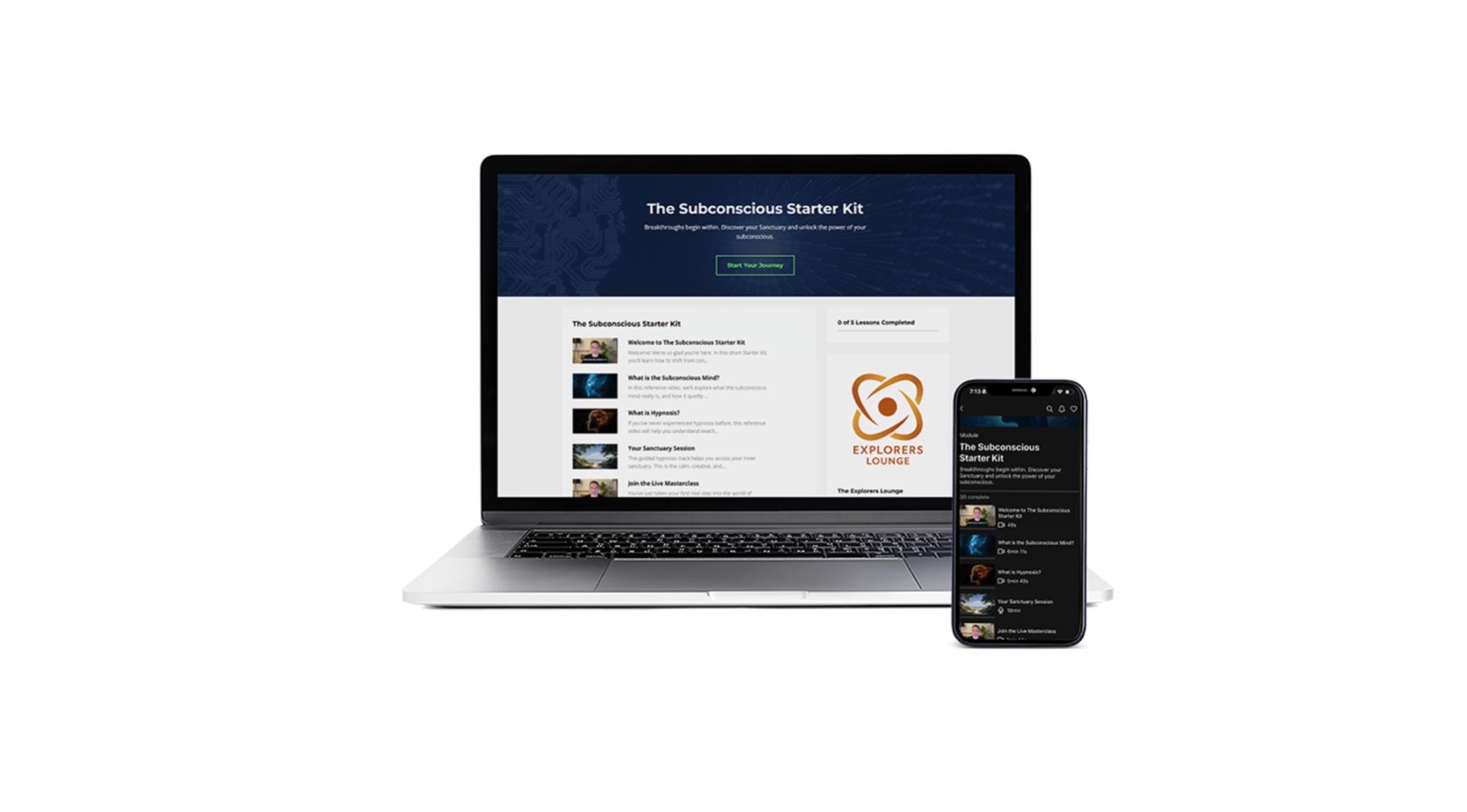
And if you’re ready to stop outsourcing your sense of progress to the next milestone, start with the Subconscious Starter Kit. Inside it is a free training, Why You Self-Sabotage — And How To Rewire Your Subconscious To Launch And Follow Through, along with the Sanctuary Session, a guided subconscious reset designed to help you build grounded internal alignment.
Because sustainable growth doesn’t come from chasing the next spike.
It comes from stabilizing the level you’re stepping into.
Breakthroughs begin within.